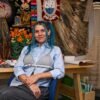

Veronica Coleman Built The Vibrant Village So No Small Shop Has to Go It Alone
A military spouse and mom of two, she went from selling vintage on eBay to running a 50-vendor collective at Dania Pointe, built on one idea: entrepreneurship shouldn't be lonely.
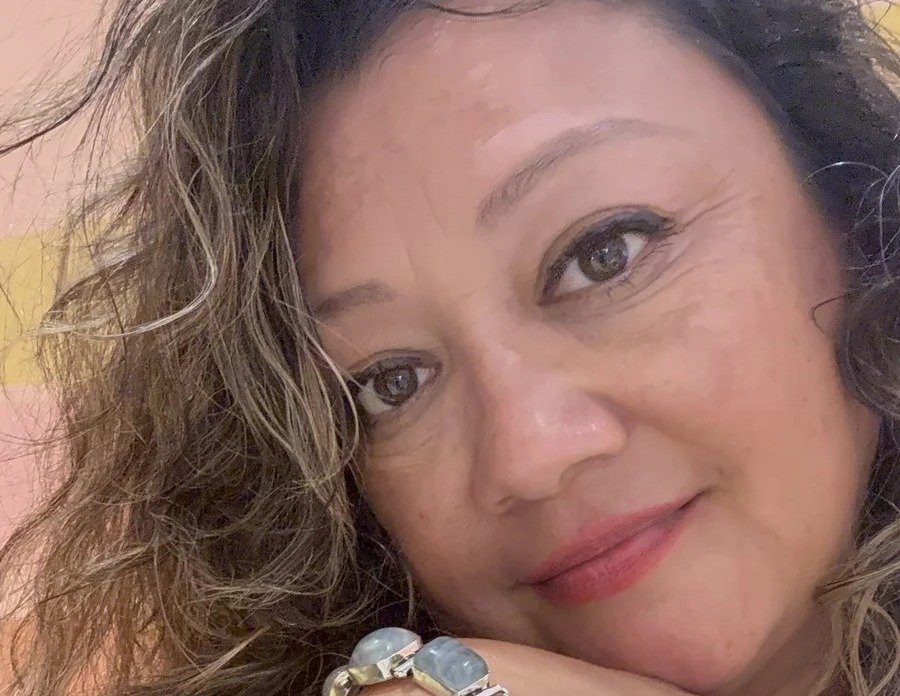
When Veronica Coleman’s military family moved from California to Florida at the start of the pandemic, she had been a stay-at-home mom for seven years. She started sourcing vintage and selling it on Etsy and eBay. When markets reopened, she took her inventory to local pop-ups. That’s where she found the community she’d been missing, along with the heat, wind, rain and unpredictable sales that made every market feel like a gamble.
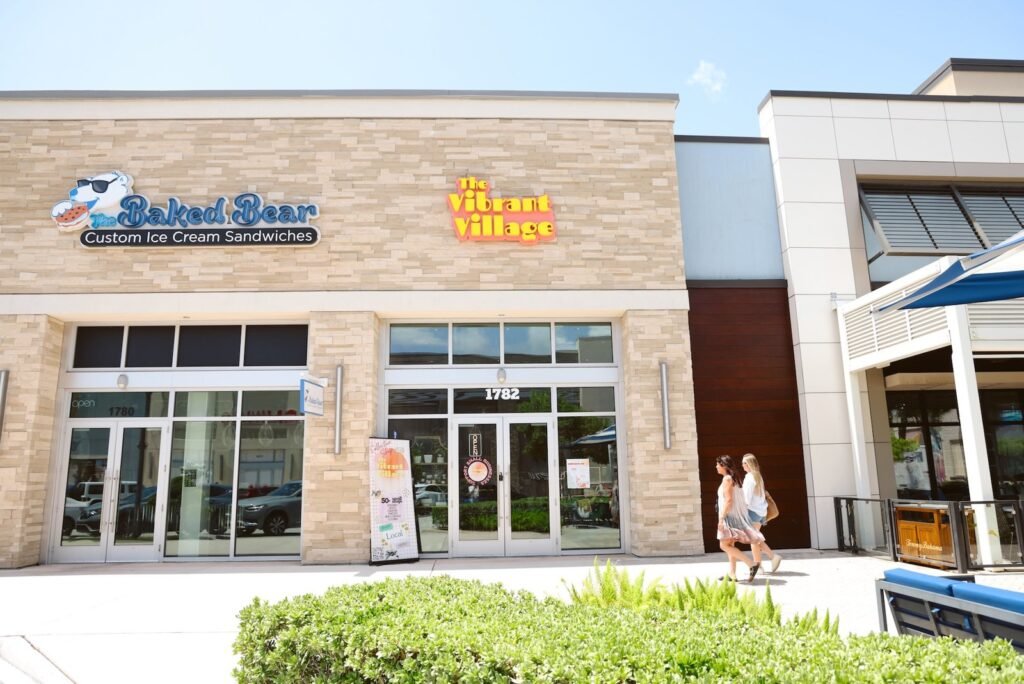
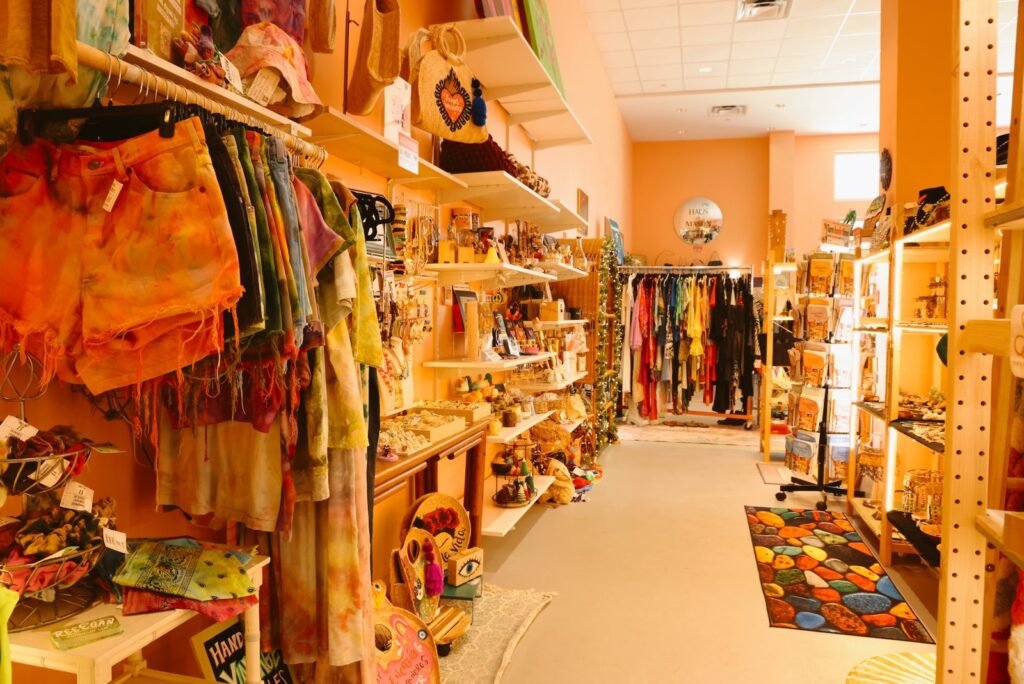
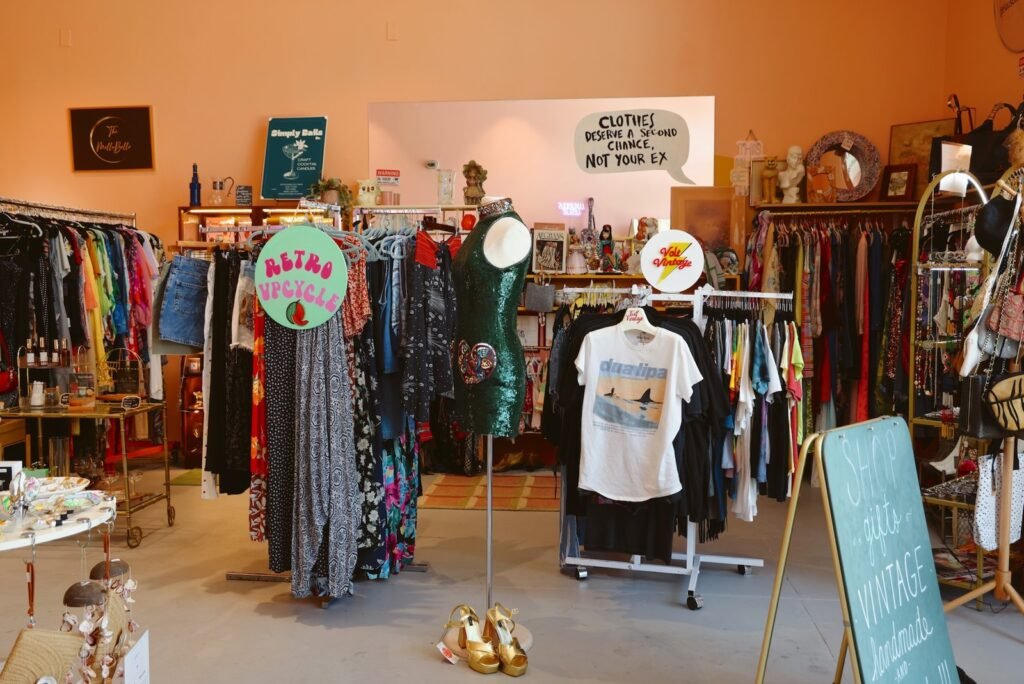
She wanted a storefront. With two young sons, she couldn’t staff one alone. So she built a collective: one store where many small shops share the space, the shifts and the customers, curated to feel like a single boutique rather than a row of antique booths. The Vibrant Village opened in downtown Hollywood with 20 vendors. Two years later it moved to Dania Pointe, into a space almost three times bigger, and today it has more than 50 vendors selling handmade goods, art, vintage clothing and kids’ craft supplies. There’s also a back-room workshop space that creators can rent by the hour.
Veronica talks with CREATIV about the loneliness nobody mentions, hard rules for a friendly store, and why 50 vendors turned out to be easier than 20.
The loneliness nobody talks about#
What made you start The Vibrant Village?
As a military wife coming from California to Florida at the beginning of Covid, and a stay-at-home mom, it was pretty lonely. I thought pop-ups and markets would help with that. There’s a side of entrepreneurship people don’t talk about: the loneliness of running your own business. There’s nobody to bounce ideas off, collaborate with, or cheer you on. At markets I understood why we were all lugging our inventory everywhere. It was for the community, and to be seen by customers.
Then came the hurdles: bad weather, too hot, too windy, raining. It felt like I was gambling with my money every market. I knew I wanted a retail store, especially a vintage shop, but as the mother of two young boys there was no way I could commit to the hours of running a storefront alone. So I opened a collective shop, a store where many small shops come together to create one big shopping experience.
How did it feel once the doors opened?
Amazing. I finally felt like I had direction, and I wasn’t alone anymore. I wasn’t just sitting at home snapping photos of inventory and posting them on eBay all day. I was helping other small shops grow at the same time as my own. I started it with a friend, Amanda, who later moved to North Florida, and together we got the collective going.
Community with clear rules#
What are you most proud of?
Creating a community of positive collaboration. In small business there can be copycats, competition or jealousy. My goal is a space with no competition. I’m very careful about who comes into the store, and I watch the products so nobody brings in competing items and everyone gets a fair chance to have their work seen and sold. It isn’t perfect. There have been times I’ve had to mediate, and times I’ve had to let someone go. I do it to protect the people who work hardest and support each other.
What’s an instant dealbreaker?
Criticizing a fellow vendor’s work. Or only promoting your own items when a customer walks in. We treat the store as one store, not your private store. Each vendor works two shifts a month, so no-shows, repeated lateness or poor customer service reflect on everyone. We’re surrounded by big brands and we don’t have millions for advertising, so our customer service has to be impeccable. I protect the store’s reputation above everything.
Has it been a smooth road?
There have been struggles, of course. Early on we lost a few vendors who weren’t a good fit, and I was overwhelmed by people missing shifts. I learned quickly that I needed firm rules. I can’t run this as a friendship store. Now there’s a contract every vendor signs. The hardest part for me is separating friendship from business. I become friends with the vendors, and someone can be a great friend and creative match but still not be right for the business.
I built this so I would not be by myself.
Veronica Coleman
From 20 vendors to 50#
The move to Dania Pointe meant going from 20 to more than 50 vendors. How did you make that leap?
I struggled with that decision for months. I was having trouble sustaining 20 vendors, and I knew I’d need at least 50 to fill the new store. Then one day I just went for it. As strange as it sounds, I felt more vendors would be easier than fewer, and I was right: more people to collaborate with, more people sharing our story, more help when I needed it. I realized my real struggle was doing everything on my own. I built this so I would not be by myself, and my own need for control was stopping people from helping me. So I let go, and gave trusted vendors who’d been with me for two years bigger roles.
How did you decide what to hand off?
I handed off the tasks I felt least successful at and most overwhelmed by. I’m great at advice, inspiration and business ideas; I’m not great with the constant small daily questions. My assistant now handles vendor communication. I wrote a handbook of policies and procedures and a welcome packet showing step by step how to enter inventory, and the questions dropped dramatically. The hardest thing to hand off was social media, so one of the vendors whose style is most like mine posts a few times a week. I focus on finances, payroll and recruiting vendors.
Raising the bar#
What lesson has shaped you?
The last three years feel like a blur, raising two boys while building this business. I recently read a quote: “Maybe you feel like you’re not doing enough because you keep raising the bar.” That hit me. At first all I wanted was enough inventory for a market booth. Then enough money for two rolling clothing racks. Then enough to cover my booth fee and expenses. Now we’re in a plaza among some of the biggest brand names, a group of South Florida local small shops, and I realize this is making it. I’d be lying if I said I don’t have imposter syndrome. But people keep asking when we’ll open in North Florida, Coral Springs, or California, where I’m from. There’s a need for this.
Who do you do it for?
My family, first. My youngest son always tells the story of us driving through downtown Hollywood when I said, “One day I’m going to own a store here.” He gets so excited when he says, “And look now, Mom! You did it!” I love showing my kids that your life is what you make it.
You’re also running art workshops. Is there a moment that stands out?
One with my own son and his friends. Art isn’t something every middle-school boy loves, so I mixed it with something they do love: comic books. I found a box of damaged comics from the 1980s and ’90s at a thrift store, and the boys made comic-book collages on 12-by-12 plywood. They played music, talked and created, and they’re begging for another one. It’s very hard to find art classes for middle- and high-school boys, so I’m turning it into a series.
Advice for a founder on day one#
“Take a few days to sit with yourself and get to the root of what you want to accomplish, and what’s blocking you. Figure out what you love doing in the business and what you don’t, and find a way to delegate what you don’t so you can grow beyond your imagination. Build a strong foundation. I didn’t have a business plan, but you need some kind of map, in your head or on paper. Most of all, be the kind of person who knows you will figure it out. When things go wrong, and they will, trust that you are strong enough, smart enough and creative enough to figure it out.”
The Vibrant Village · Dania Pointe, Dania Beach, FL
thevibrantvillageco.com · @thevibrantvillageco
This story is part of CREATIV Magazine’s Founder’s Edition, a series dedicated to the people building independent businesses. Know a founder whose story deserves to be told? Tell your story, at no cost.